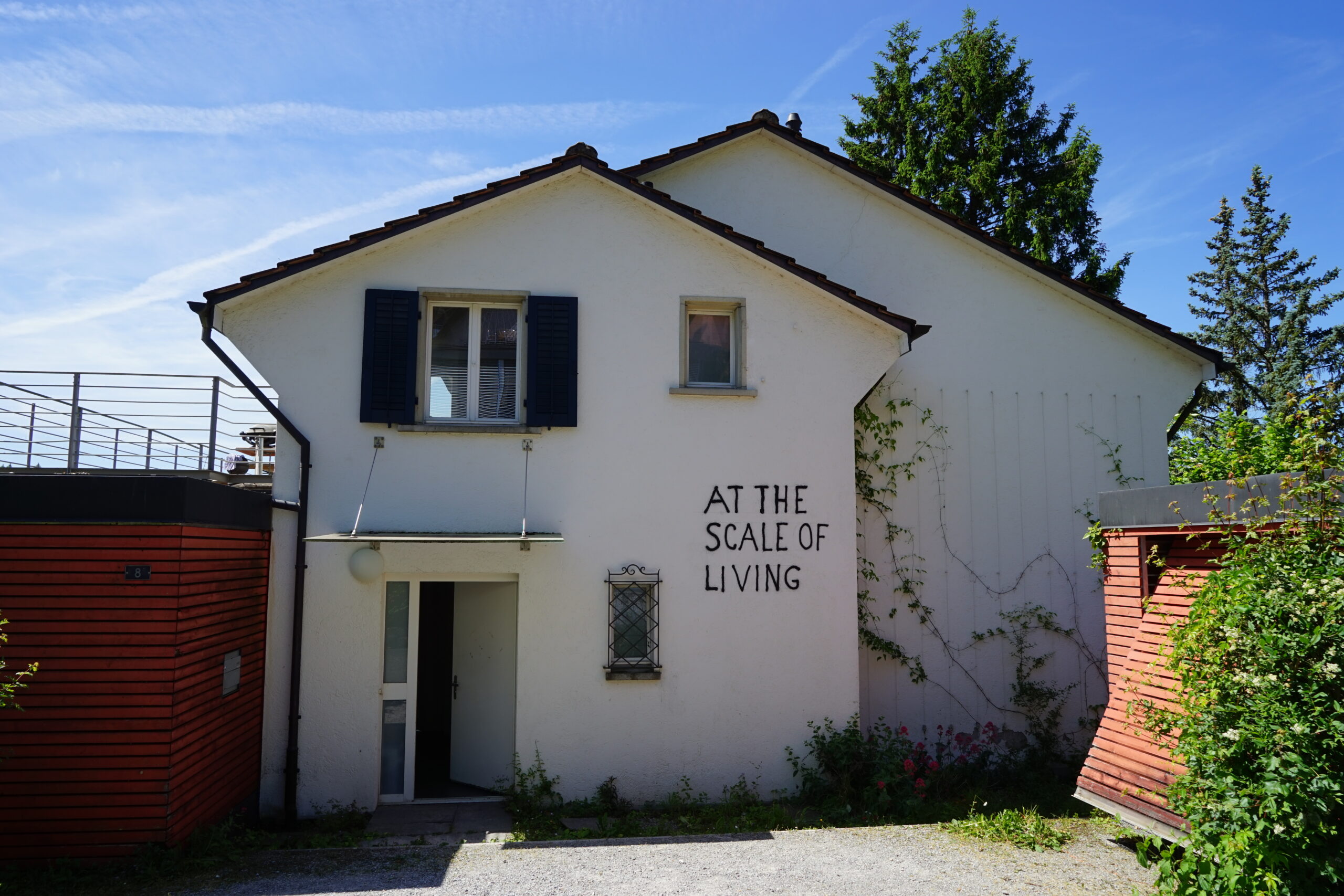
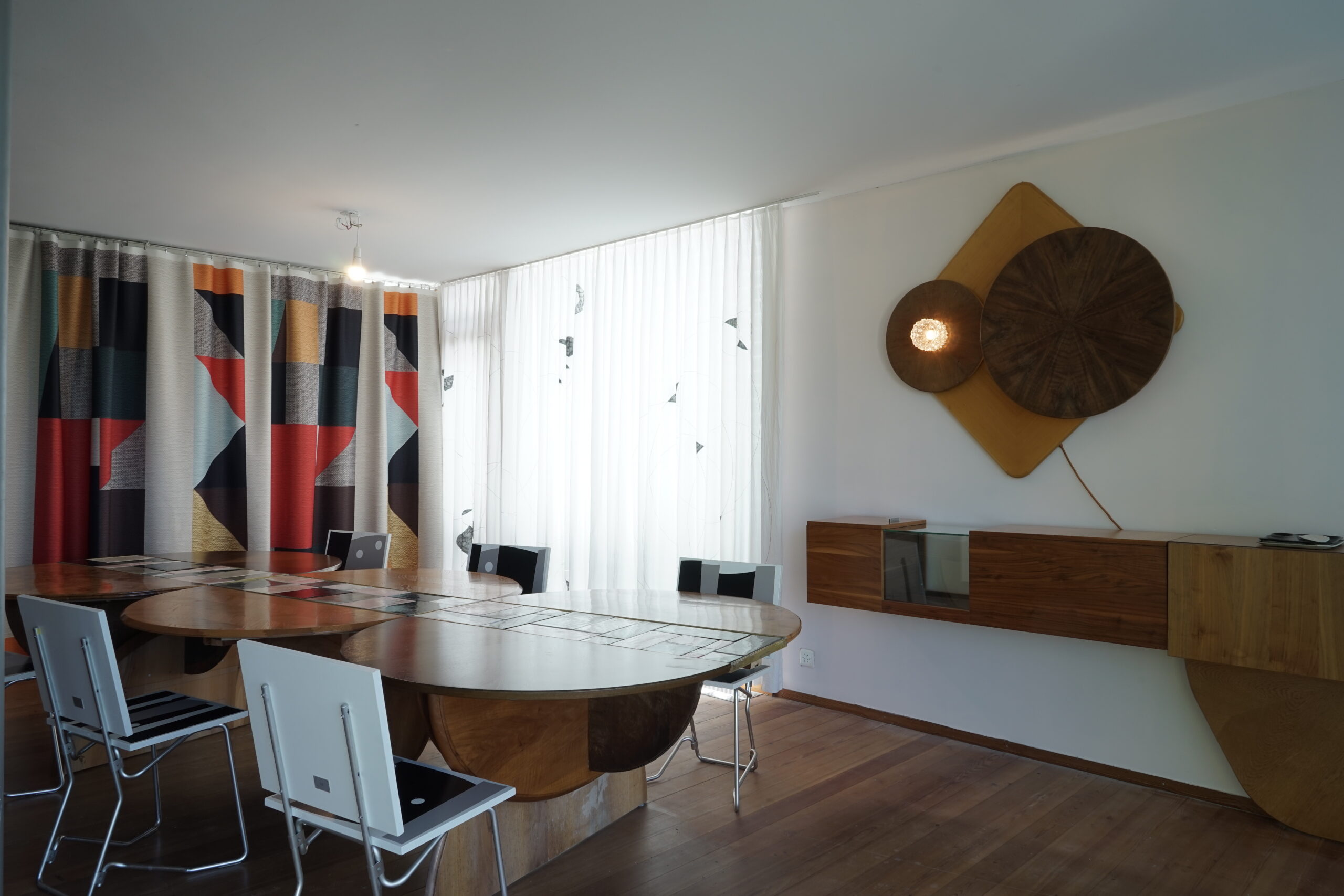
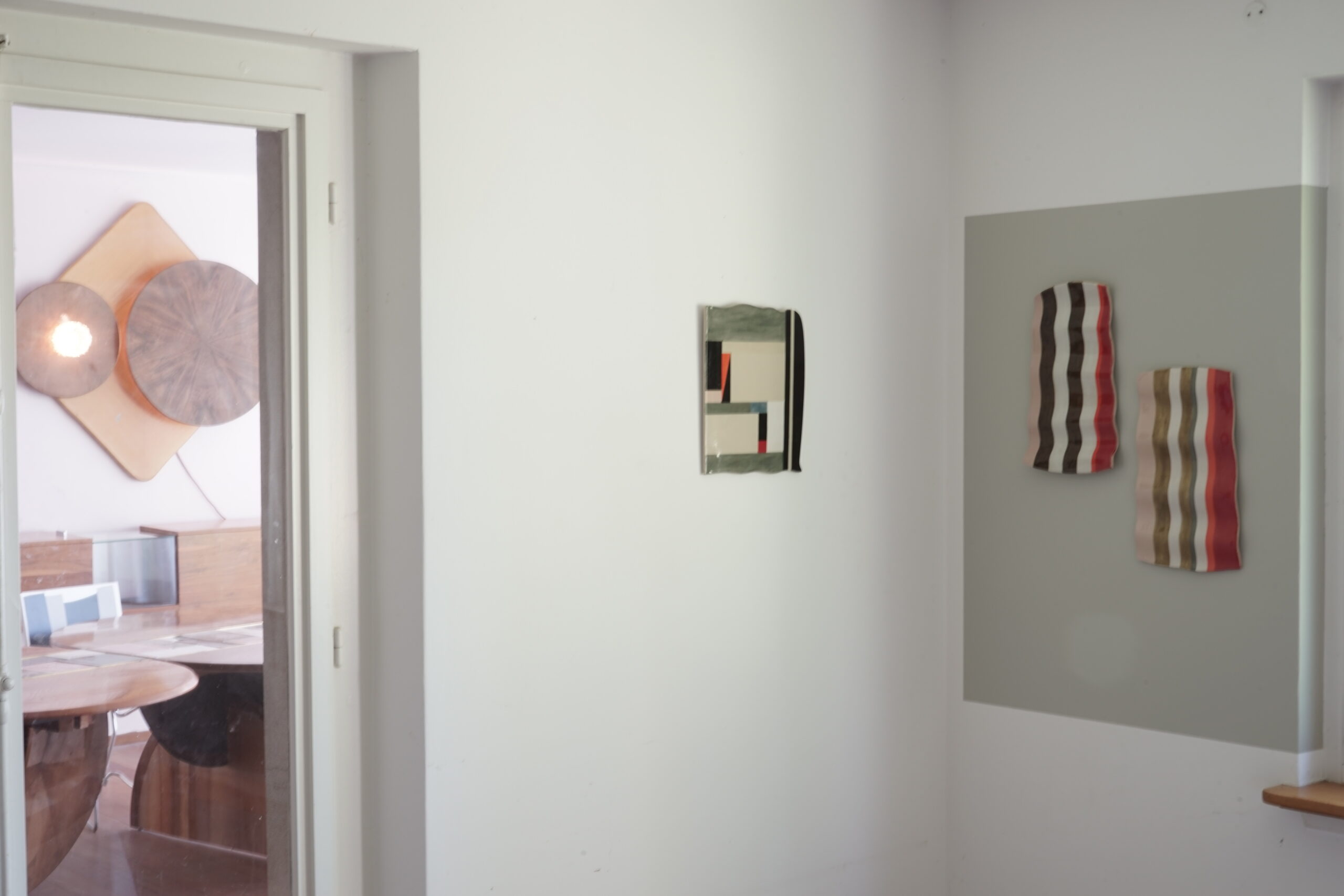
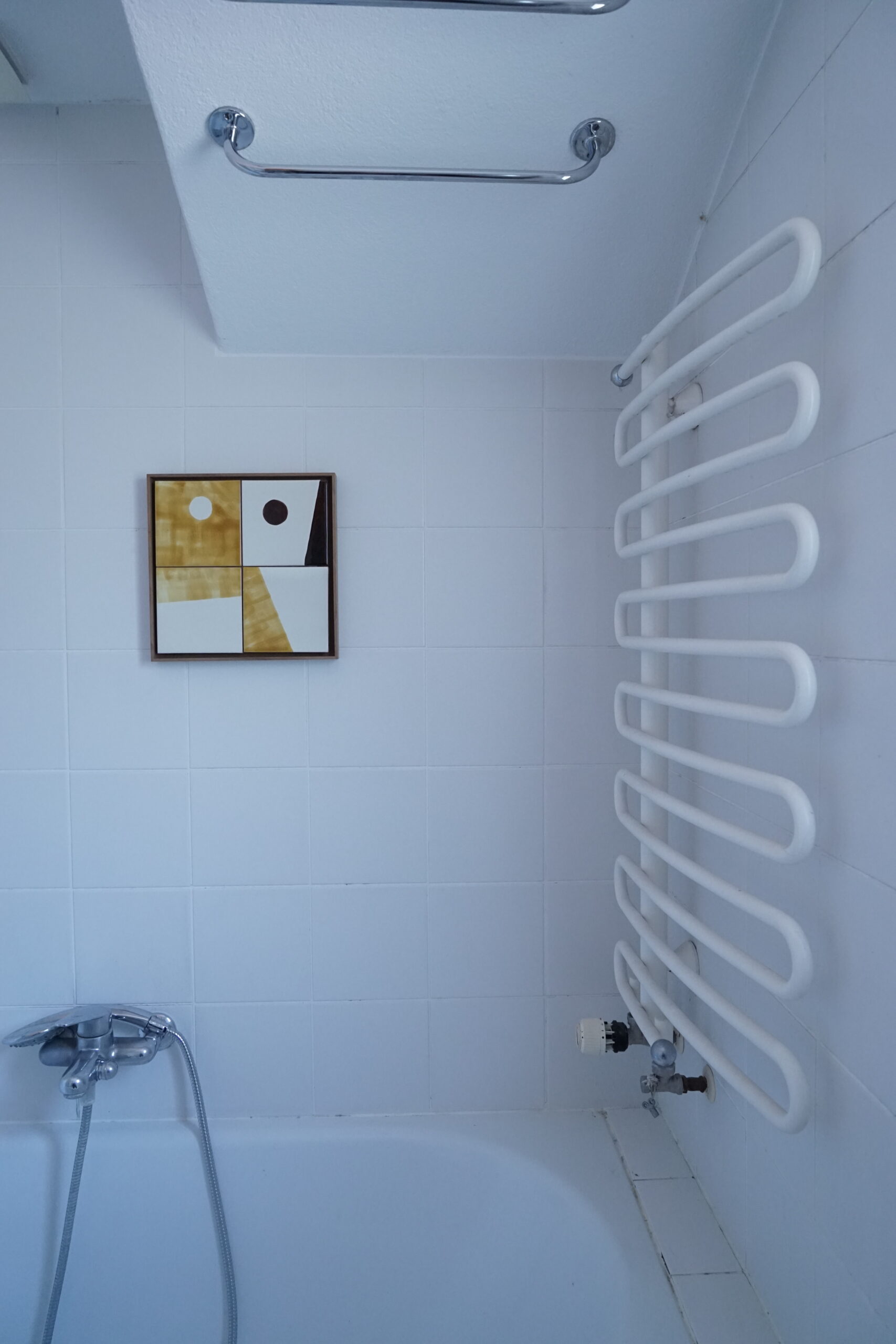
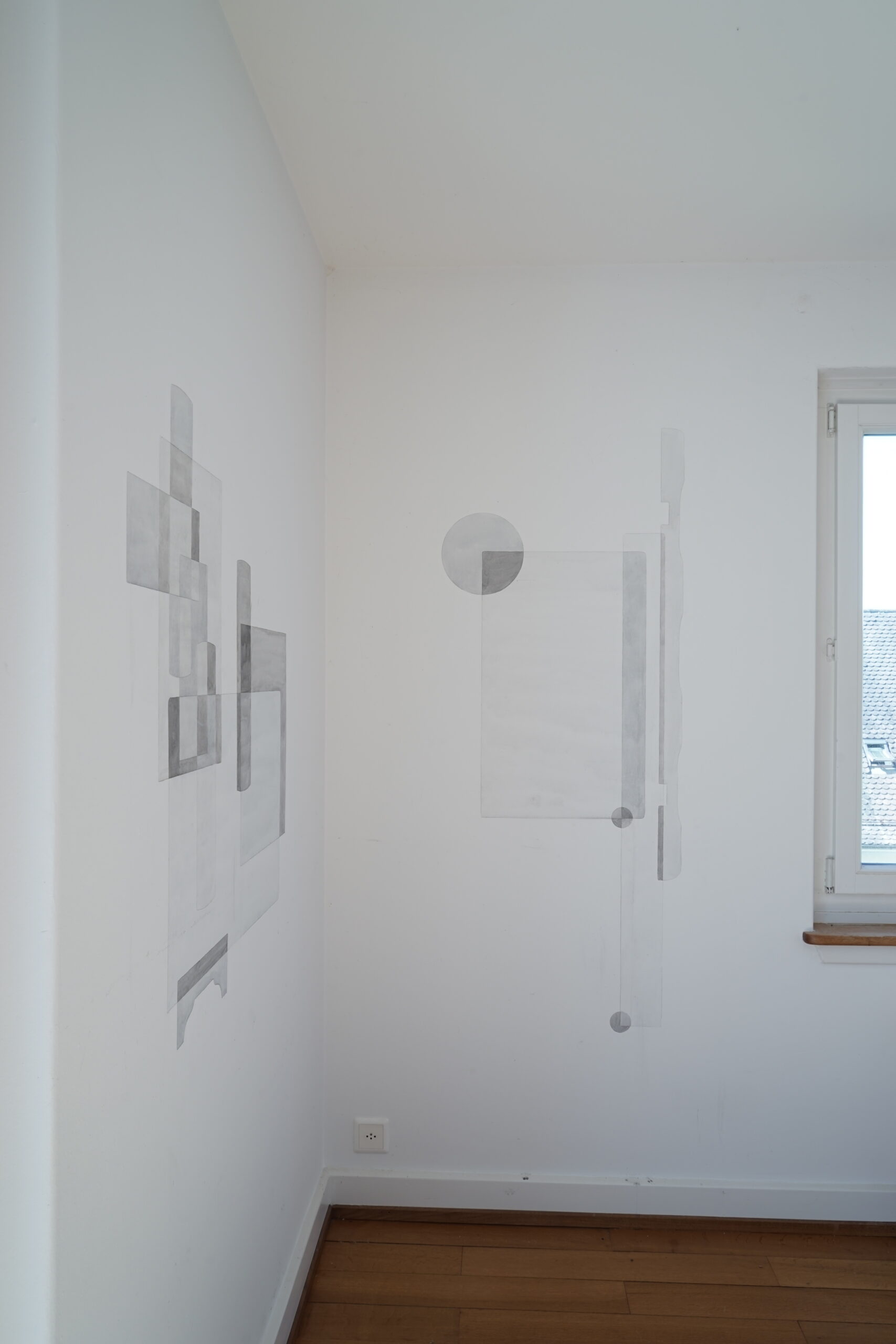
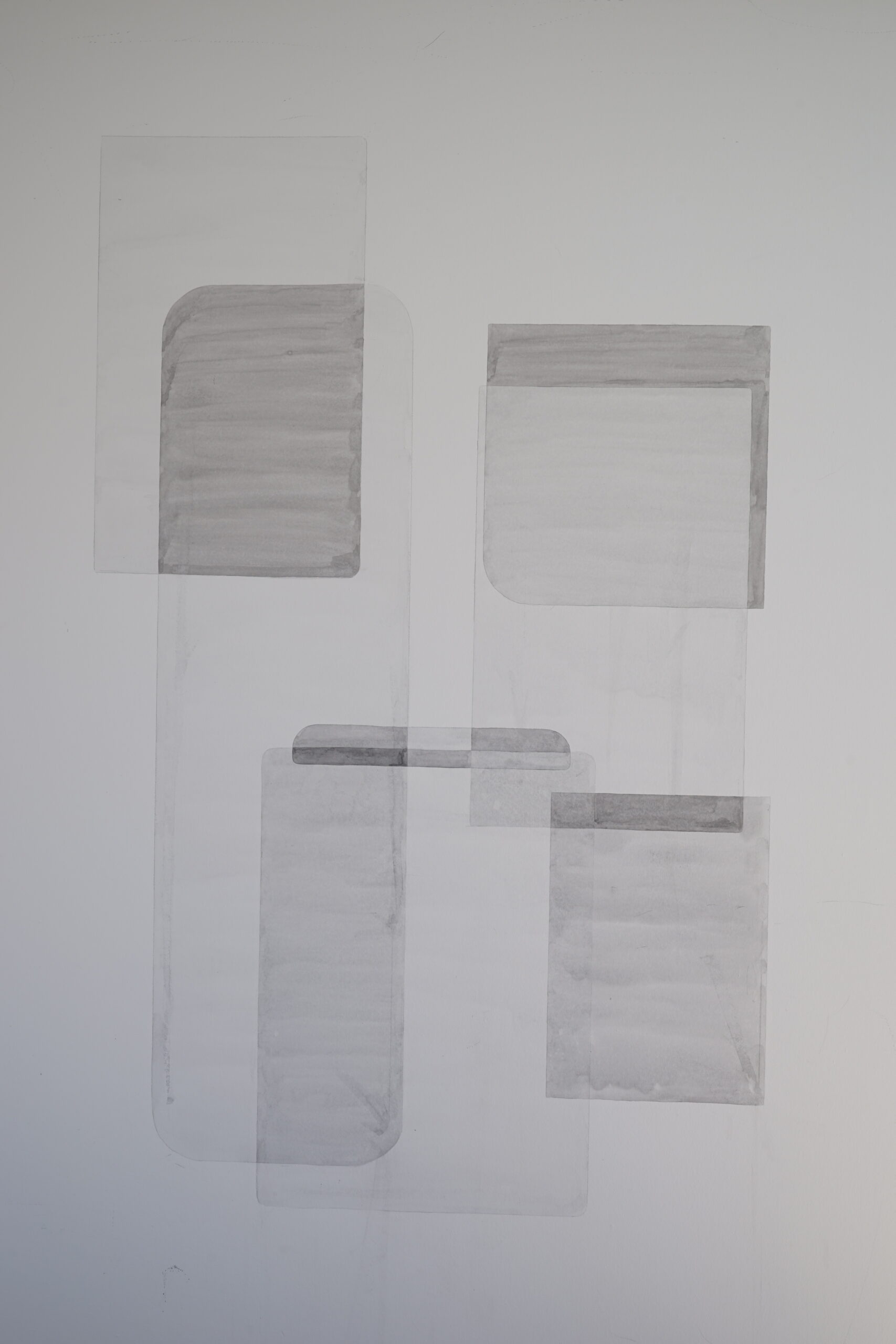
Shortly before its demolition, a 1940s family house in Meilen became a temporary working space, exhibition and lived environment. Clare Goodwin used the house as a full-scale laboratory: a place where paintings, ceramics, assemblage sculptures, wall drawings and floor prints could be tested directly against the measurements of domestic life. The project was not a finished exhibition in the usual sense. It was closer to a studio visit inside a house that was already partly decommissioned, but still full of traces, proportions and memories.
The house as measure
Goodwin’s work often begins with the scale of the body and the everyday interior: kitchen units, doors, furniture, walls, floors and the social habits attached to them. In Meilen, the house itself becomes the measure. The distance between doors, the height of the ceiling, the length of a wall or the pattern of the parquet floor all become part of the work.
Many of the assemblage sculptures are made from existing domestic furniture or interior elements. Goodwin does not simply treat these objects as found material. She takes them apart and rebuilds them, usually without cutting them down, so that their original scale remains present. Their function is interrupted, but their domestic familiarity is still visible.
A sympathetic intervention
The house is not an anonymous empty building. It belongs to the history of a family and is connected to personal memories, photographs and stories. The project responds to this situation carefully. Instead of dramatically destroying or overpowering the house, Goodwin works with it: marking certain areas, painting selected walls, placing works into rooms and allowing the atmosphere of the building to remain visible.
This creates a strange balance between preservation and transformation. The house is already on its way out, but for a short time it becomes active again: as a scenography, a studio, a test site and a place for visitors to move through.
Moving through the rooms
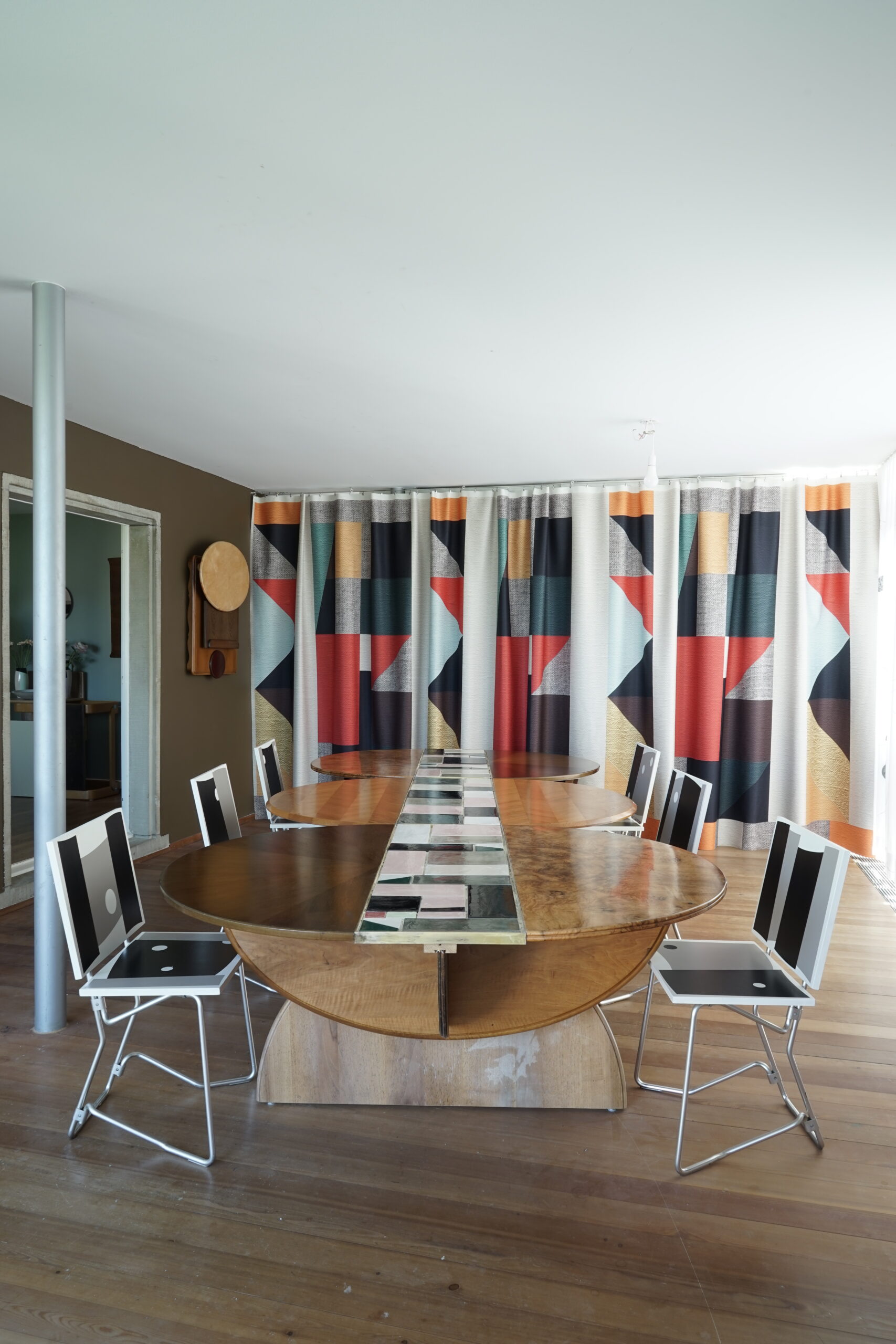
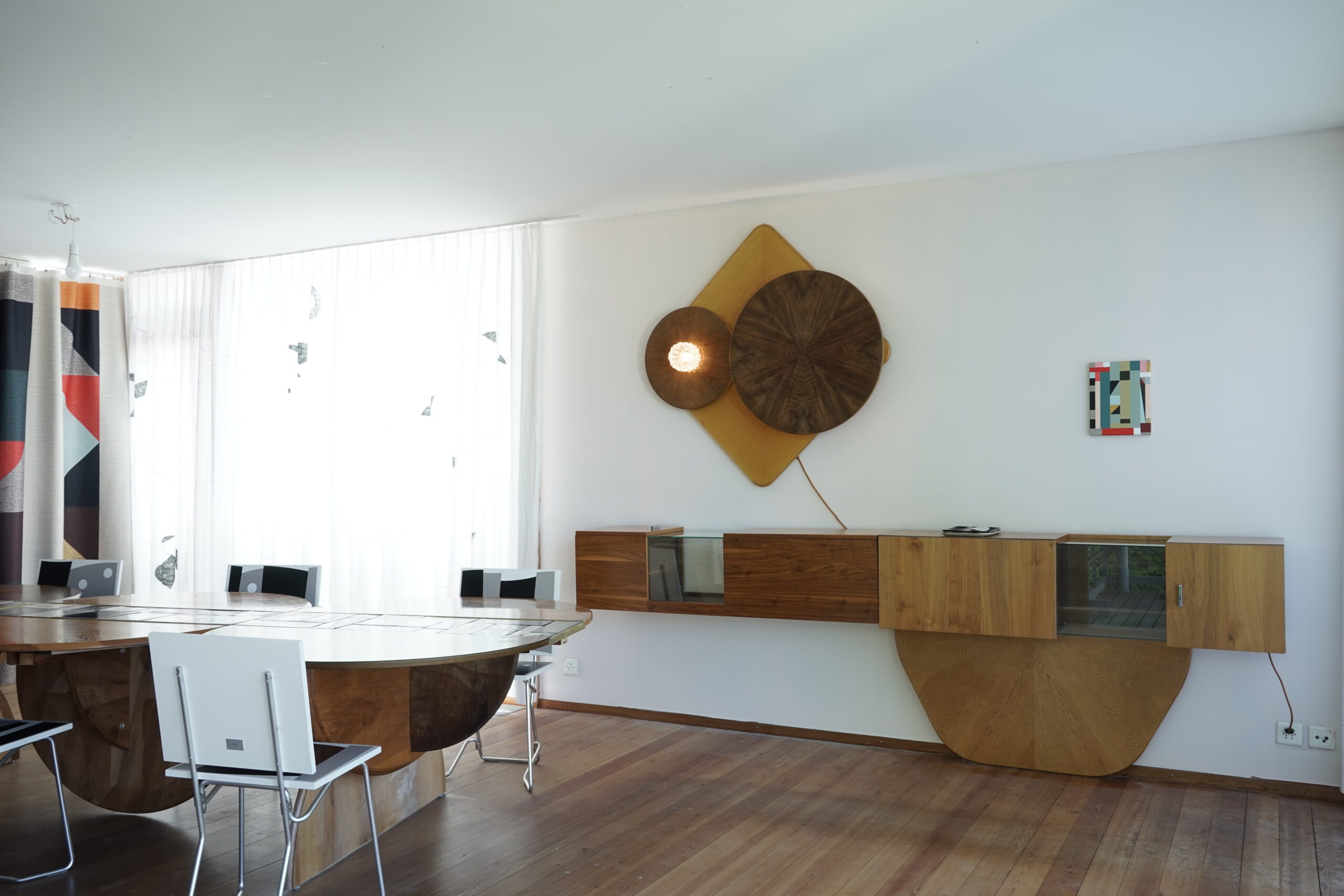
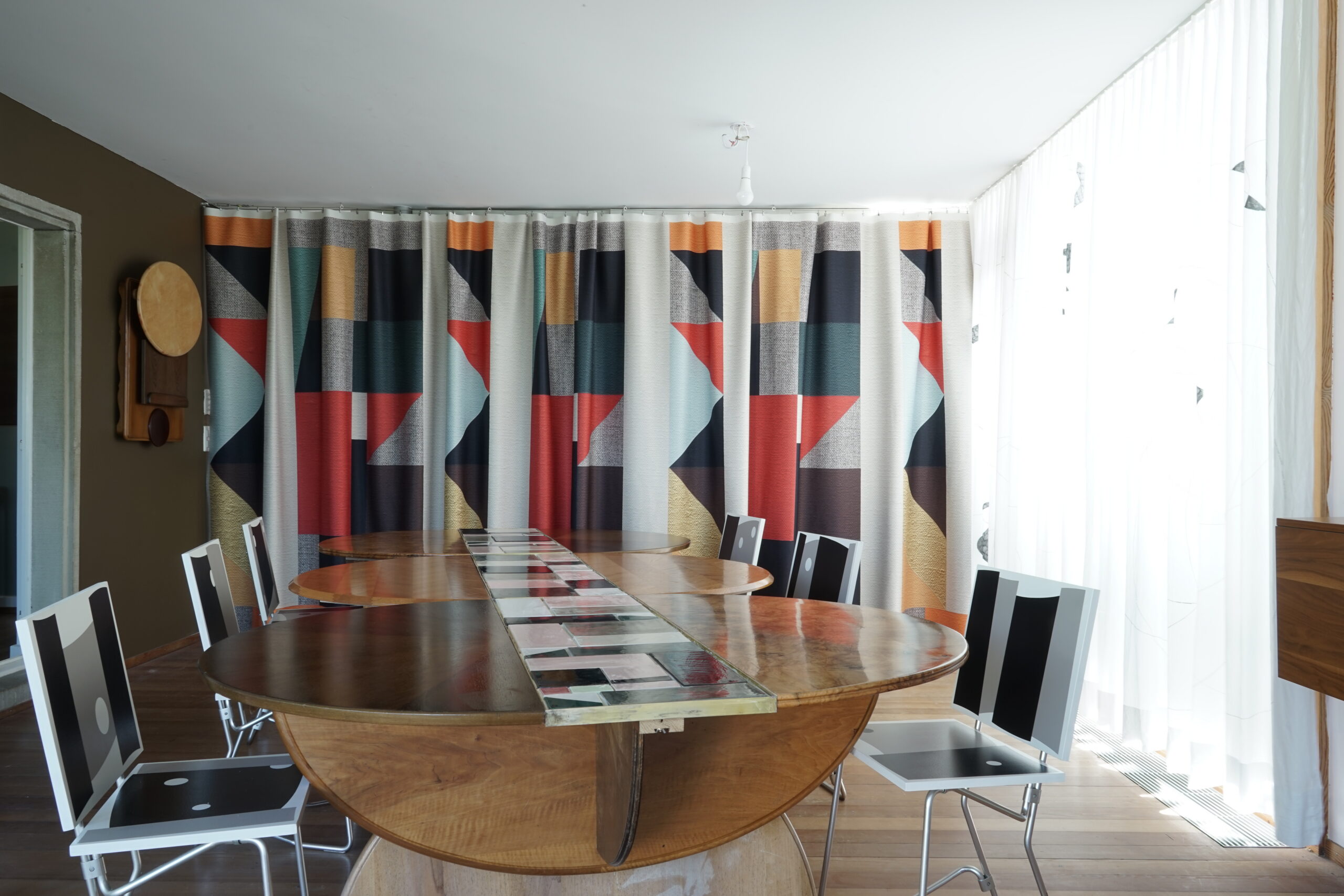
Visitors do not enter through the original front door. They are led around the side of the building and enter through the side door into the ground floor. From there, the route moves through a dining area with a large table, a console, a lamp and curtains, then into a smaller, more intimate room, and finally into a further space at the back.
Downstairs, the assemblages and objects relate directly to the rooms around them. They feel as if they could belong there, but at the same time something about them is displaced. Furniture becomes sculpture; the familiar logic of use becomes uncertain.
Upstairs, in the former bedrooms, the atmosphere changes. Works on paper, wall transfers and direct traces from the parquet floor open up another part of the process. Goodwin has made simple wood prints from the floor itself, almost like souvenirs or monoprints taken from the house before it disappears.
Work in progress
At the Scale of Living is also the beginning of a longer process. Some ideas and materials developed in Meilen will continue into Goodwin’s following exhibition at the Helvetia Art Foyer in Basel. Removed from the house and brought into a white-cube space, the works will keep their domestic scale, but lose the original rooms that produced them. This shift is part of the experiment.
The project therefore asks a simple question: what happens when an artist’s work is not only placed in a house, but developed through the house itse